Chevrolet · 2017–2023
Bolt EV Recalls
10 known recalls affecting the Chevrolet Bolt EV (2017–2023). Enter your VIN to check if your specific vehicle is affected, or browse by model year below.
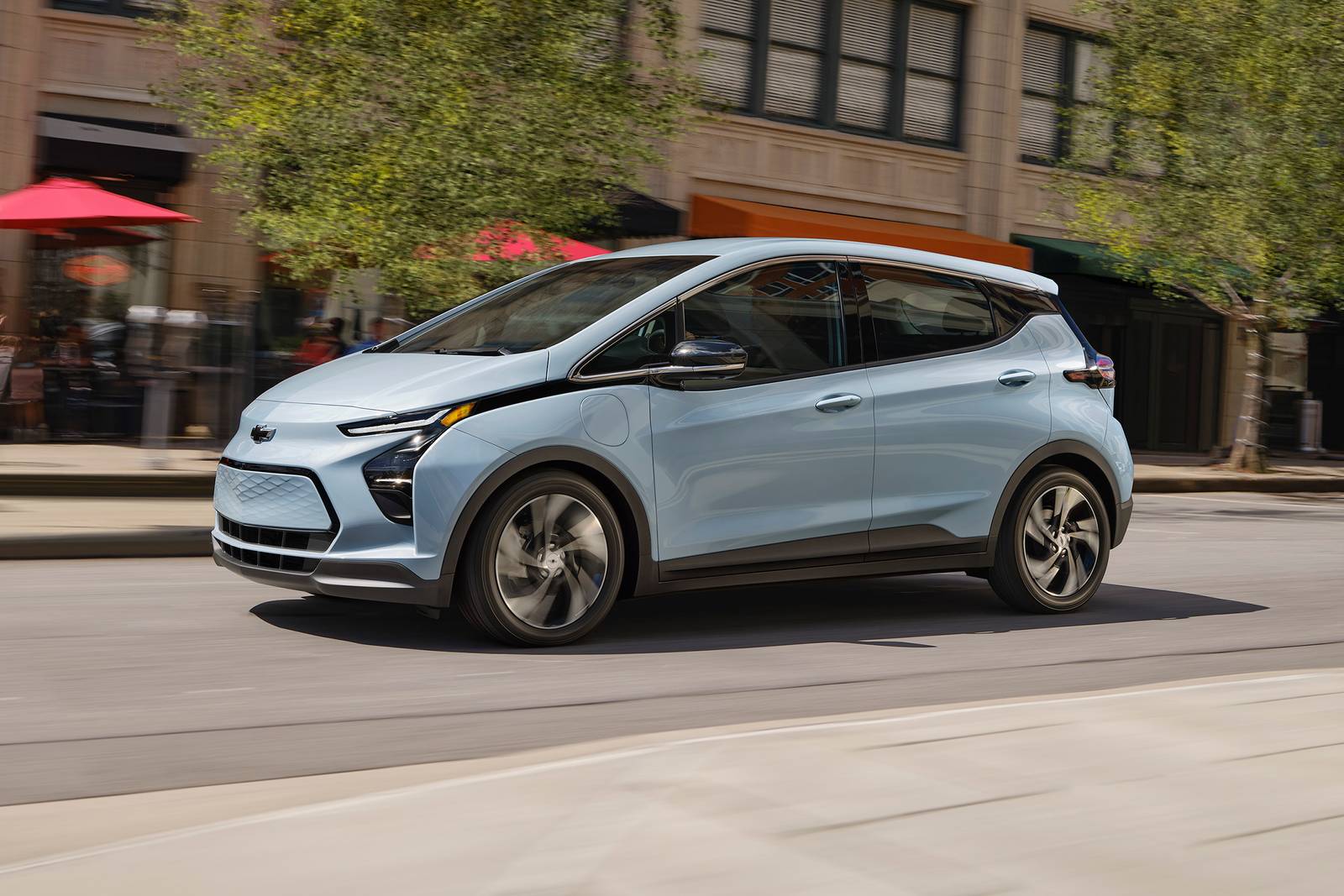
Chevrolet Bolt EV Recalls
Summary
Issue: On certain vehicles, the recall repairs completed by a General Motors dealer during recall N212345941/N212345944 (Transport Canada recall no. 2021-524) may not have been done correctly. As a result, a second repair is required. On certain vehicles, the high-voltage battery could overheat when it is charged to over 90% of its capacity. As a result, the battery could create smoke or heat, which can melt or damage the battery and nearby parts. Safety Risk: A battery that overheats can create a fire risk. Corrective Actions: General Motors will notify owners by mail and advise you to take your vehicle to a dealership to install an advanced diagnostic software that will monitor the high-voltage battery and warn you if it detects a problem. If you see this warning, you should contact a dealership to arrange replacement of the affected high-voltage battery module. Please click here for additional information, including precautions to take until the recall repairs are completed, or call 1-800-263-3777 : <a href= https://my.gm.ca/chevrolet/en/how-to-support/safety/boltevrecall> https://my.gm.ca/chevrolet/en/how-to-support/safety/boltevrecall</a>
Summary
Issue: On certain vehicles, the recall repairs may not have been completed by a General Motors dealer during recall N222383790 and/or N222383791 (Transport Canada recall number 2022-719). As a result, a second inspection is required. On certain vehicles, the carpet could catch fire after a crash where a front seat belt pretensioner deploys. Safety Risk: A fire that occurs after a crash could create an increased risk of injury. Corrective Actions: General Motors will notify owners by mail and advise you to take your vehicle to a dealership to inspect and, if necessary, install foil tape under the carpet near the front seatbelt pretensioners. On certain model year vehicles, the technician will also install seatbelt pretensioner covers.
Summary
Issue: On certain vehicles, the instrument panel may not have been manufactured correctly. As a result, the passenger-front airbag may not open and inflate properly in a crash. Safety Risk: An airbag that doesn't inflate properly could create an increased risk of injury in a crash. Corrective Actions: General Motors will notify owners by mail and advise you to take your vehicle to a dealership to replace the instrument panel. To reduce the safety risk until the recall repairs are completed, General Motors recommends not to transport a person in the front-passenger seat.
Summary
Issue: On certain vehicles, the carpet could catch fire after a crash where a front seat belt pretensioner deploys. Safety Risk: A fire that occurs after a crash could create an increased risk of injury. Corrective Actions: General Motors will notify owners by mail and instruct you to take your vehicle to a dealership to install foil tape under the carpet near the front seatbelt pretensioners. On certain model year vehicles, the technician will also install seatbelt pretensioner covers.
Summary
Issue: This recall is for certain driver's all-weather floor liners sold with new vehicles or as accessory parts sold at General Motors dealerships. On certain vehicles, the accelerator pedal could get stuck on the floor liner. If this happens, the vehicle may not slow down when you release the accelerator pedal. Note: If you continue to push the brake pedal, the brake-override system will allow you to stop the vehicle. Safety Risk: A stuck accelerator pedal could lead to unintended acceleration and increase the risk of a crash. Corrective Actions: General Motors will notify owners by mail and instruct you to take your vehicle to a dealer to replace the driver's all-weather floor liner. You should remove the all-weather floor liner until you receive the replacement part.
Summary
Issue: On certain vehicles, the high-voltage battery could overheat when it is charged to over 90% of its capacity. As a result, the battery could create smoke or heat, which can melt or damage the battery and nearby parts. Safety Risk: A battery that overheats can create a fire risk. Corrective Actions: General Motors will notify owners by mail and advise you to take your vehicle to a dealership to install an advanced diagnostic software that will monitor the high-voltage battery and warn you if it detects a problem. If you see this warning, you should contact a dealership to arrange replacement of the affected high-voltage battery module. Please click here for additional information, including precautions to take until the recall repairs are completed, or call 1-800-263-3777 : <a href= https://my.gm.ca/chevrolet/en/how-to-support/safety/boltevrecall> https://my.gm.ca/chevrolet/en/how-to-support/safety/boltevrecall</a>
Summary
Issue: On certain vehicles, the high-voltage battery could overheat when it is charged to over 90% of its capacity. As a result, the battery could create smoke or heat, which can melt or damage the battery and nearby parts. Safety Risk: A battery that overheats can create a fire risk. Corrective Actions: General Motors will notify owners by mail and replace defective battery modules. Until replacement battery modules are available, General Motors recommends the following: 1. Enable "Hilltop Reserve" (for 2017-2018 models) or "Target Charge Level" (for 2019 models) using the vehicle's infotainment centre to limit the state of charge to 90%. If you are unable to make these changes, or do not feel comfortable making them, you should visit a dealer to have these adjustments completed. 2. Charge your vehicle more frequently and avoid depleting the battery below approximately 113 km (70 miles) of remaining range, where possible. 3. Out of an abundance of caution, park your vehicle outside immediately after charging and not leave vehicle charging indoors overnight. Please click here for additional information, or call 1-800-263-3777 : <a href= https://my.gm.ca/chevrolet/en/how-to-support/safety/boltevrecall> https://my.gm.ca/chevrolet/en/how-to-support/safety/boltevrecall</a> Note: All vehicles must also have Transport Canada Recall # 2020-540 completed.
Summary
Issue: On certain vehicles, the rear doors may unlatch suddenly due to a damaged cable caused by repeated rear window movement. As a result of this damage, a rear door could open while driving when the window is lowered. A damaged cable may also cause the inside door handle not to work. Safety Risk: A door that opens while the vehicle is moving could create an increased risk of injury. Corrective Actions: General Motors will notify owners by mail and instruct you to take your vehicle to a dealer to replace the inside door handle cable in both rear doors. Note: Until the recall repairs are completed, you can prevent the chance of a door opening while driving by turning on the child lock feature in the rear doors.
Summary
On certain vehicles, a problem with the rear brake system may cause gas bubbles to form in the brake fluid. This could cause a soft brake pedal feel and a reduction in brake performance, increasing the risk of a crash causing injury and/or damage to property. Correction: Dealers will bleed the rear brakes.
Summary
Certain vehicles may experience front windshield wiper stall during cold, snowy conditions due to a software error. If one or both windshield wipers were to stall, this could limit the driver's visibility, increasing the risk of a crash causing injury and/or damage to property. Correction: Dealers will replace the front wiper motors with wiper motors containing improved software.

Related Recall Checks
Check recalls for specific Chevrolet Bolt EV model years